Hello,
I am Dr. Jaewon Heo, a board-certified plastic surgeon specializing in facial rejuvenation procedures. Recently, I have been spending a great deal of time reviewing the medical literature using various research tools to stay up to date with the latest developments in aesthetic plastic surgery.
During this process, I came across several particularly interesting topics. Going forward, I would like to share some of these findings with you—especially those that I believe many patients are curious about but may not have had the opportunity to explore in depth.
Today’s topic is one that frequently comes up during consultations:
the buccal fat pad (BFP), often referred to by patients as the “deep cheek fat” or the “fullness beneath the cheekbones.”
In particular, I would like to discuss two scientific studies that examined the buccal fat pad and its role in facial aging and facial contour.
사진
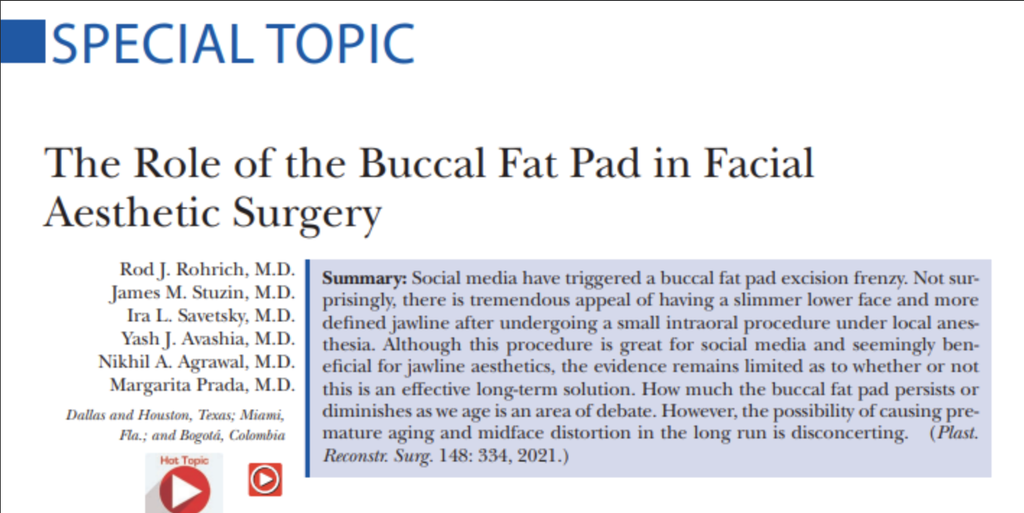
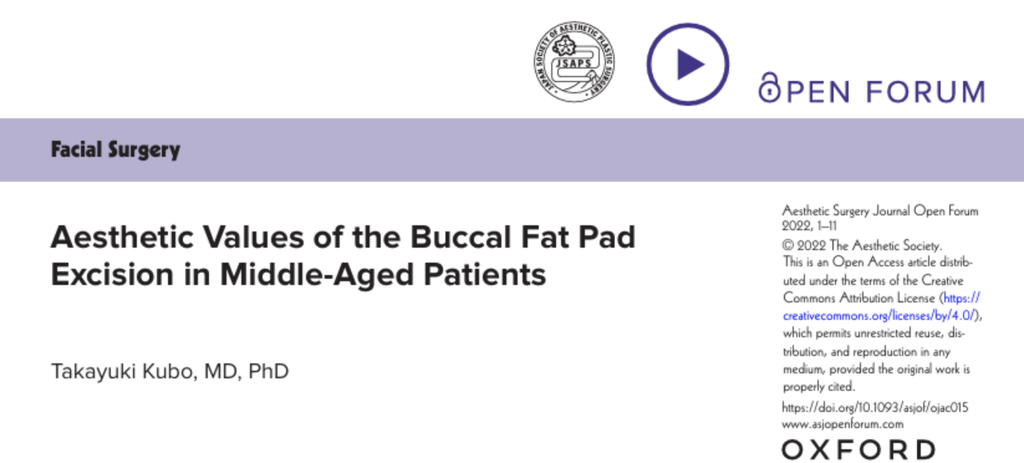
Today, I’d like to discuss the relationship between the buccal fat pad and facial aging, especially the sagging that many people begin to notice as they enter middle age. We’ll also look at why addressing this deep cheek fat during facial rejuvenation procedures may contribute to a younger and more refreshed appearance. Most importantly, we’ll explore these questions through the lens of scientific research and see what the published literature actually tells us.
Many patients tell me that:
“My cheeks seem to be sagging.”
“The area around my mouth looks heavier than before.”
“My jawline has lost its definition.”
These are very common concerns, and they are not simply a matter of perception.
As we age—particularly from our mid-to-late fifties onward—the fat located beneath the cheekbones gradually descends. As it moves downward, it can place additional weight on the area around the mouth and contribute to a softer, less defined jawline.
One of the structures involved in this process is the buccal fat pad, a relatively deep fat compartment situated between the muscles of mastication and the muscles responsible for facial expression. When we’re young, the buccal fat pad is typically well developed, contributing to the soft, full facial contours that are often associated with youthfulness.
In fact, what many people refer to as “baby fat” is partly related to the prominence of this deep facial fat compartment.
As we age, however, gravity and age-related changes in facial support structures gradually allow this fat to descend.
The result is often the development of the marionette lines below the nasolabial folds, along with increased heaviness and sagging around the corners of the mouth.
So what happens if a portion of this descended buccal fat is selectively reduced?
In one of the studies mentioned above, researchers performed buccal fat pad reduction in 133 patients with a mean age of 54 years.
Following surgery, they observed a statistically significant reduction in lower facial fullness, improved definition of the jawline and lower face, and a subtle elevation of the perioral region, creating a more youthful and refreshed appearance.
사진
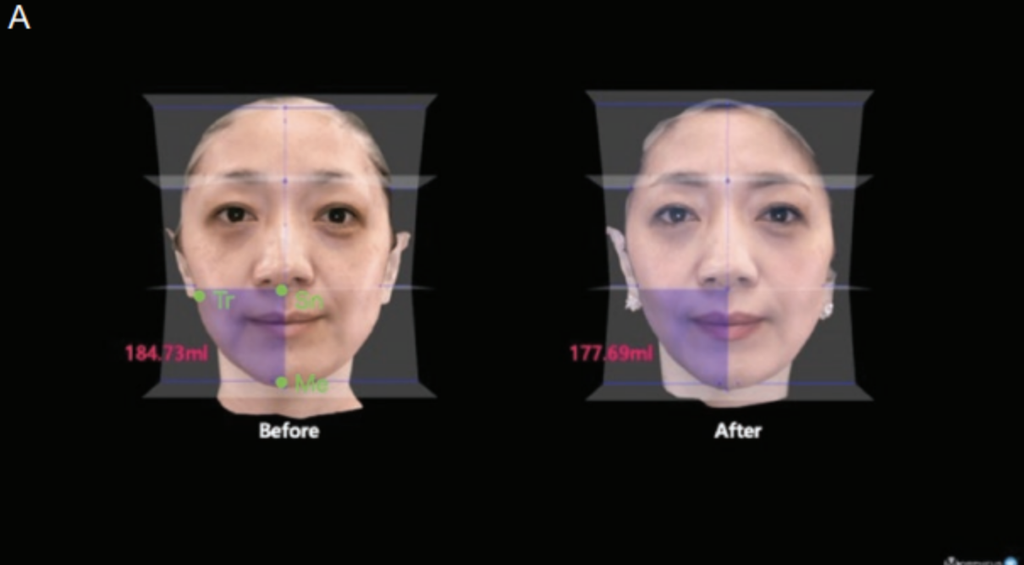
What’s particularly interesting is that the average amount of fat removed was only about 1.6 grams per side. Despite such a seemingly small volume, measurable improvements in facial contour were observed. This suggests that the effect is not simply a matter of how much fat is removed, but rather how the deeper structures of the face are strategically balanced and refined. However, there is an important point that must be emphasized.
This is not merely a procedure designed to make the face slimmer by removing fat.
That distinction becomes especially important in middle-aged and older patients. The aging face is not necessarily heavy because there is too much fat. More often, the problem is that facial fat has gradually descended over time.
In other words, the issue is one of position, not simply volume.
For that reason, buccal fat reduction should be performed conservatively. In particular, the descended lower portion of the buccal fat pad may be selectively addressed, while the upper portion should be carefully preserved. Maintaining the upper buccal fat helps support youthful facial fullness and avoids the hollow or over-resected appearance that can occur when excessive fat is removed.

If the upper portion of the buccal fat pad is removed too aggressively due to poor surgical judgment or technique, it can lead to unwanted consequences such as hollow cheeks, a tired or aged appearance, and even facial asymmetry. This is why a thorough understanding of facial anatomy and a conservative approach are essential when performing buccal fat reduction.
Of course, this procedure is not appropriate for everyone. In patients with significant skin laxity or advanced facial aging, buccal fat reduction alone may not be sufficient to achieve an optimal result. In such cases, it is often more effective when combined with other facial rejuvenation procedures that address the underlying sagging and loss of structural support.

For example, when combined with procedures such as a facelift or neck lift, buccal fat reduction can contribute to a more harmonious, balanced, and long-lasting rejuvenation result. Ultimately, the goal of buccal fat reduction is not simply to make the face smaller.
Rather, it is to selectively address descended deep facial fat that may be adding unnecessary heaviness to the lower face. By carefully refining these deeper structures, the procedure can help soften the appearance of the area around the mouth, improve jawline definition, and create a lighter, more refreshed overall facial appearance.
Procedures like this highlight an important principle in facial rejuvenation:
The best results come not from aggressive tissue removal, but from a precise understanding of facial anatomy and a thoughtful, conservative surgical approach.
When performed appropriately, this strategy can produce natural-looking improvements that age gracefully over time. Buccal fat reduction is certainly not a procedure that everyone needs. However, for carefully selected patients, it can provide a meaningful improvement by restoring facial balance and addressing changes that occur with aging in a subtle yet impactful way.
Thank you for reading, and I’ll come back with a more interesting topic in the next post.